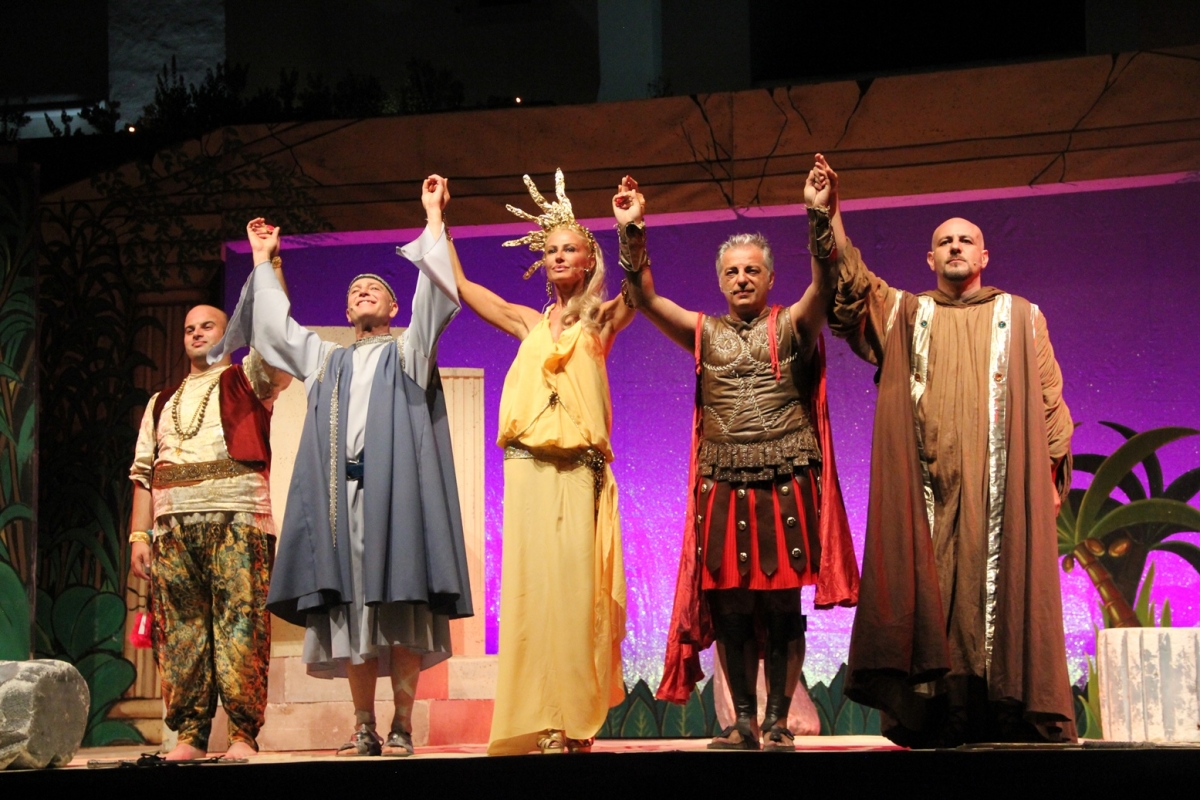
Circe, la figlia del Sole
satyr play from Ettore Romagnoli · adapted by Vito Cesaro
Claudio Lardo as the Philosopher Pig
My Role
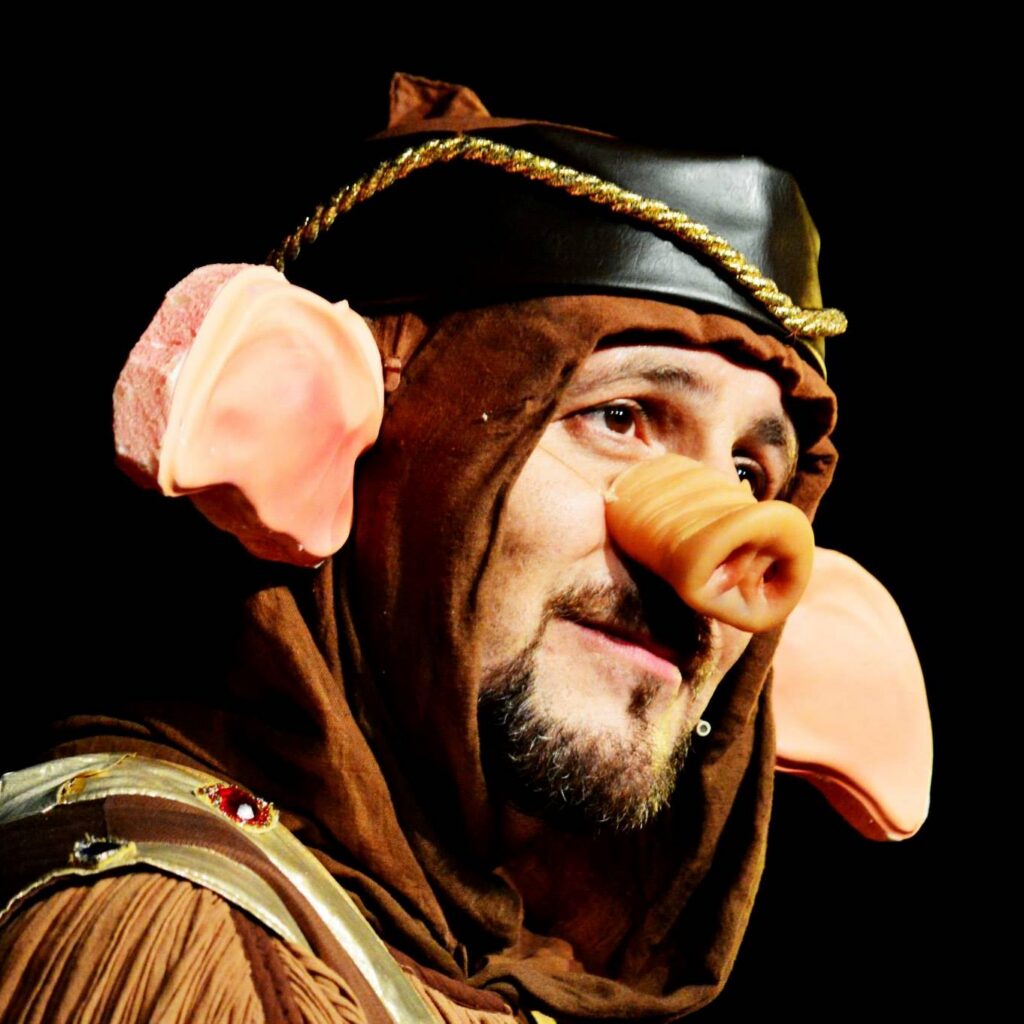
On Circe’s island the pigs can talk, and the wisest of them all is the Philosopher Pig. He is the one who reveals to Hercules and his companion Cercopo that those pigs were once men, transformed by the sorceress, and who warns them against her charms. But Hercules does not listen.
Credits
The Production
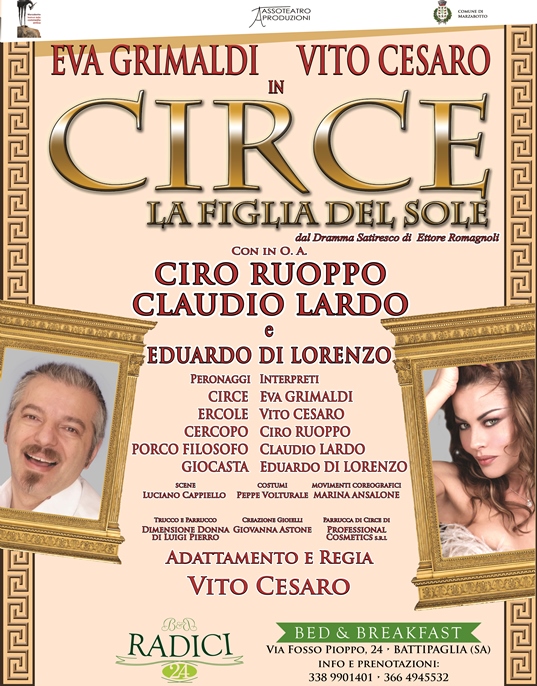
Circe is a goddess of Greek religion, daughter of the Sun, who lives on the island of Aeaea: an apparent paradise covered in thick vegetation, seemingly uninhabited. Hercules, a figure of Roman mythology, and his loyal companion Cercopo come ashore to rest in the cool shade of the baobabs, but they cannot sleep a wink because of some strange presences: talking pigs! During their stay on the island, thanks to what they learn from a Philosopher Pig, Hercules and Cercopo discover that those pigs are none other than men transformed by the sorceress. They learn that the goddess draws all men to her with her beauty and charm: no one can resist her, and everyone falls into her snares! In spite of everything, and although Cercopo keeps urging him to flee the island, Hercules refuses to listen to the philosopher and is set on a new adventure. And so the fearless, mighty hero who defeated the Centaurs, Cerberus and the Lernaean Hydra decides to take on Circe as well, to save all those who have been turned into pigs. Unfortunately, things turn out differently, and in a series of madcap situations bordering on pure farce, as in almost every classical comedy, it falls to the crafty companion to save the day.
This satyr play, first staged at the Carlo Felice theater in Genoa in 1924, was written by Ettore Romagnoli, a Hellenist and man of letters who taught at the universities of Catania, Rome and Milan. He became famous as an essayist and literary critic, and for his expert translations of many Greek works, including the tragedies of Euripides, Aeschylus and Sophocles, the comedies of Aristophanes, and Homer’s Iliad and Odyssey. The original work was titled “La figlia del Sole” (The Daughter of the Sun) and, like other plays of the early 20th century, was written in rhyme. In this text Romagnoli combined two classical cultures, the Greek and the Roman: the hero of the story is Hercules, not Ulysses as in the Odyssey. The adaptation, while respecting the original text, has made it smoother and faster, with comic punchlines that shift it from a drama in rhyme to a lively comedy. The characters are peculiar, funny, well drawn and at times even surreal, and they move on a dazzling, colorful stage.
Photos and Videos
Performances
- Valva (SA)
- Padula (SA)
- Fasano (BR)
- Castrolibero (CS)
- Giffoni Valle Piana (SA)
- Marzabotto (BO)